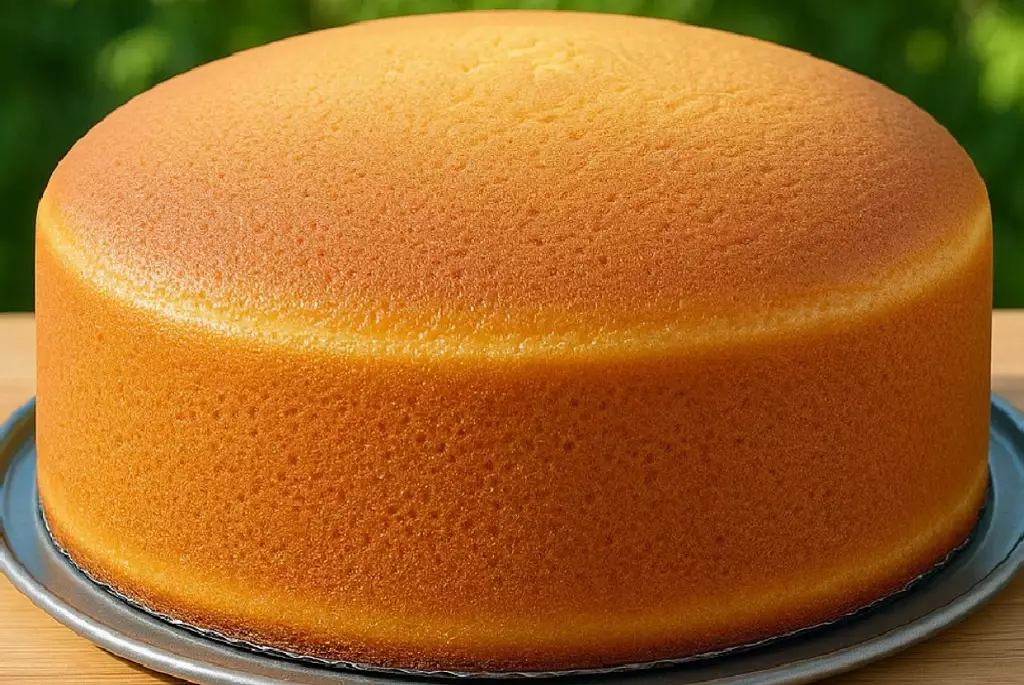
This simple vanilla sponge cake is soft, fluffy, moist, and full of rich vanilla flavor. Made with everyday ingredients, it’s perfect for birthdays, afternoon tea, or any special occasion. Enjoy it plain, topped with powdered sugar, or layered with whipped cream, fruit, or your favorite frosting.
Prep Time: 20 minutes
Cook Time: 30–35 minutes
Total Time: 55 minutes
Servings: 10–12 slices
Oven Temperature: 350°F (175°C)
Ingredients
- 2 cups (454 g) all-purpose flour
- 1 teaspoon baking powder
- 1 teaspoon baking soda
- ½ teaspoon salt
- 1¼ cups (284 g) unsalted butter, softened
- 1⅔ cups (397 g) granulated sugar
- 3 large eggs, at room temperature
- 1 cup (240 g) buttermilk, at room temperature
- ¼ cup (60 ml) vegetable oil
- 2 teaspoons vanilla extract
Instructions
Step 1: Prepare the Oven and Pan
Preheat the oven to 350°F (175°C). Grease and flour a 9-inch round cake pan or line it with parchment paper.
Step 2: Combine the Dry Ingredients
In a medium bowl, whisk together the flour, baking powder, baking soda, and salt. Set aside.
Step 3: Cream the Butter and Sugar
In a large bowl, beat the softened butter and sugar with an electric mixer for 3–5 minutes, until pale and fluffy.
Step 4: Add the Eggs and Flavorings
Add the eggs one at a time, beating well after each addition. Mix in the vegetable oil and vanilla extract until combined.
Step 5: Add the Flour and Buttermilk
Add the dry ingredients in three portions, alternating with the buttermilk in two portions. Begin and end with the dry ingredients. Mix gently until just combined, avoiding overmixing.
Step 6: Bake
Pour the batter into the prepared cake pan and smooth the top. Bake for 30–35 minutes, or until a toothpick inserted into the center comes out clean or with a few moist crumbs.
Step 7: Cool and Serve
Let the cake cool in the pan for 10 minutes. Transfer it to a wire rack and allow it to cool completely before slicing or decorating.
Tips for the Best Vanilla Sponge Cake
- Use room-temperature ingredients: Butter, eggs, and buttermilk mix more evenly when they are not cold.
- Cream the butter and sugar properly: Beat for 3–5 minutes to incorporate air and create a light texture.
- Measure accurately: Use a kitchen scale for the most consistent results.
- Avoid overmixing: Mix just until the flour disappears to keep the cake tender.
- Check for doneness: Begin checking the cake at 30 minutes to prevent overbaking.
- Cool before frosting: Allow the cake to cool completely so the frosting doesn’t melt.
Flavor Variations
- Lemon Vanilla: Add 2 teaspoons of lemon zest for a fresh citrus flavor.
- Chocolate Swirl: Mix 2 tablespoons of cocoa powder into a portion of the batter and swirl it through the cake.
- Almond Vanilla: Replace 1 teaspoon of vanilla extract with almond extract.
- Berry Cake: Gently fold in 1 cup of fresh blueberries or chopped strawberries.
- Coconut Vanilla: Add ½ cup of shredded coconut to the batter.
Serving Suggestions
- Dust with powdered sugar for a simple finish.
- Serve with whipped cream and fresh berries.
- Layer with jam and vanilla buttercream for a birthday cake.
- Fill with custard or lemon curd for extra flavor.
- Drizzle with chocolate ganache or lemon glaze.
How to Store Vanilla Sponge Cake
- Room temperature: Store the unfrosted cake in an airtight container for up to 3 days.
- Refrigerator: Keep frosted or filled cake in a covered container for up to 4 days. Bring to room temperature before serving.
- Freezer: Wrap the completely cooled cake tightly in plastic wrap and foil. Freeze for up to 2 months.
- Thawing: Thaw overnight in the refrigerator or for a few hours at room temperature.
Troubleshooting
Why is my cake dense?
Overmixing, cold ingredients, or inaccurate measurements can make the cake dense. Use room-temperature ingredients and mix gently after adding the flour.
Why did my cake sink in the middle?
The cake may be underbaked, or the oven door may have been opened too early. Keep the oven closed during the first 25 minutes and check that the center is fully baked.
Why is my cake dry?
Overbaking or adding too much flour can dry out the cake. Measure ingredients accurately and check for doneness near the end of the baking time.
Why does my cake stick to the pan?
Grease and flour the pan thoroughly or line the bottom with parchment paper. Let the cake cool for 10 minutes before removing it.
Frequently Asked Questions
Can I use regular milk instead of buttermilk?
Yes. Add 1 tablespoon of lemon juice or white vinegar to a measuring cup, fill it with milk to the 1-cup mark, and let it stand for 5–10 minutes before using.
Can I make cupcakes with this batter?
Yes. Fill cupcake liners about two-thirds full and bake at 350°F (175°C) for approximately 18–22 minutes, checking for doneness with a toothpick.
Can I make this cake gluten-free?
Yes. Substitute a 1:1 gluten-free baking flour blend. The texture may vary slightly.
What frosting goes best with vanilla sponge cake?
Vanilla buttercream, whipped cream, cream cheese frosting, lemon glaze, and chocolate ganache all pair well with this cake.
Can I bake this cake in a loaf or Bundt pan?
Yes, but the baking time will vary depending on the pan’s size and shape. Check the center with a toothpick and bake until done.
Can I turn this into a chocolate cake?
Yes. Replace a portion of the flour with unsweetened cocoa powder. Because cocoa powder changes the balance of the batter, the texture and moisture may differ.
Nutrition Information
Approximate values per serving, assuming 12 slices:
- Calories: 450
- Carbohydrates: 55 g
- Protein: 5 g
- Fat: 24 g
- Sugar: 34 g
Nutrition values are estimates and may vary depending on the ingredients and serving size.
Important recipe note: I corrected the ingredient measurements to match the quantities described in your original recipe. The nutrition information is an estimate and should be verified with a nutrition calculator before publishing.