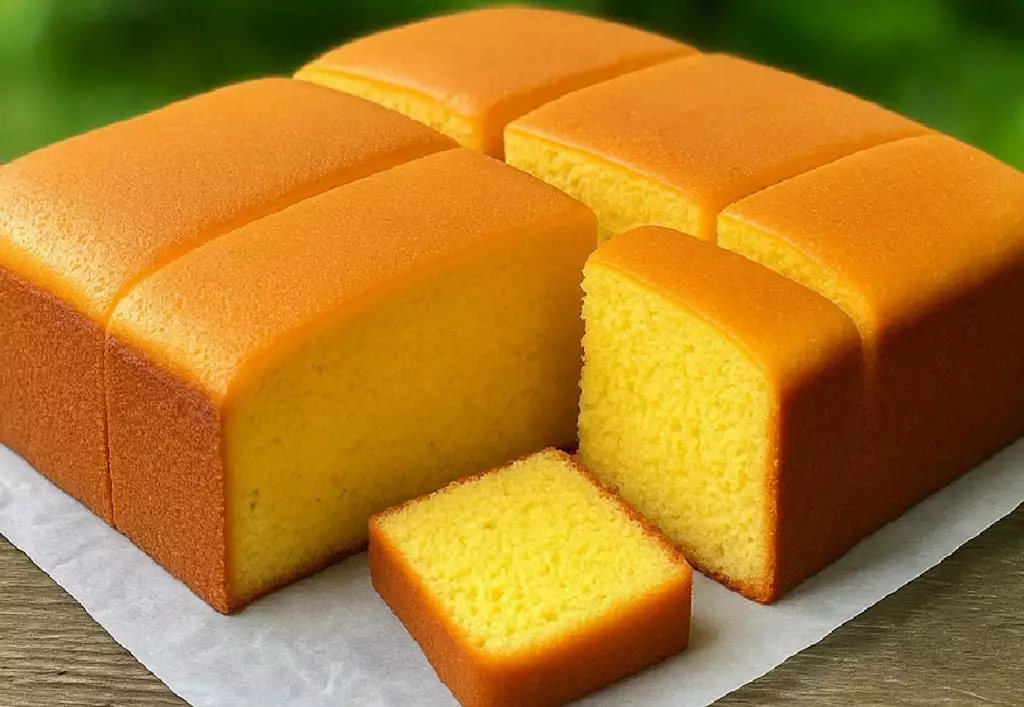
This rich butter cake is soft, moist, tender, and full of buttery flavor. Made with simple ingredients, it has a beautiful golden crust and a delicate crumb. Serve it plain with tea or coffee, or dress it up with fresh berries, whipped cream, or a sweet glaze.
Prep Time: 20 minutes
Cook Time: 40–45 minutes
Total Time: 1 hour 5 minutes
Servings: 10 slices
Oven Temperature: 350°F (180°C)
Ingredients
- 250 g unsalted butter, softened
- 200 g granulated sugar
- 6 medium eggs, at room temperature
- 1 teaspoon vanilla essence
- 1 tablespoon milk powder
- 5 tablespoons full-cream milk
- 280 g self-raising flour, sifted
Instructions
Step 1: Prepare the Oven
Preheat the oven to 350°F (180°C). Grease a 9 × 9-inch baking pan with butter and lightly dust it with flour.
Step 2: Cream the Butter and Sugar
In a large mixing bowl, beat the softened butter and sugar with an electric mixer for 3–5 minutes, until pale, light, and fluffy.
Step 3: Add the Eggs and Vanilla
Add the eggs one at a time, beating well after each addition. Mix in the vanilla essence until combined.
Step 4: Prepare the Milk Mixture
In a small bowl, mix the milk powder with the full-cream milk until dissolved. Gradually add it to the butter mixture and mix until smooth.
Step 5: Add the Flour
Sift the self-raising flour into the batter. Gently fold it in with a spatula or mix on low speed until just combined. Avoid overmixing.
Step 6: Bake
Pour the batter into the prepared pan and smooth the top. Bake for 40–45 minutes, or until a toothpick inserted into the center comes out clean.
Step 7: Cool and Serve
Let the cake cool in the pan for 10 minutes, then transfer it to a wire rack. Allow it to cool completely before slicing.
Tips for the Best Butter Cake
- Use room-temperature ingredients: Butter and eggs mix more evenly when they are not cold.
- Cream thoroughly: Beat the butter and sugar until pale and fluffy to create a tender texture.
- Add eggs gradually: This helps maintain a smooth batter.
- Sift the flour: This prevents lumps and helps distribute the ingredients evenly.
- Avoid overmixing: Mix only until the flour is incorporated to prevent a dense cake.
- Check for doneness: Start checking at 40 minutes to avoid overbaking.
Flavor Variations
- Lemon Butter Cake: Add 1 tablespoon of finely grated lemon zest.
- Chocolate Swirl: Swirl melted, cooled chocolate through a portion of the batter before baking.
- Nutty Butter Cake: Fold in ½ cup of chopped walnuts or pecans.
- Vanilla Bean: Replace the vanilla essence with vanilla bean paste.
- Coconut Butter Cake: Sprinkle shredded coconut over the batter before baking.
Serving Suggestions
- Dust with powdered sugar for a simple finish.
- Serve with fresh strawberries, blueberries, or raspberries.
- Add whipped cream or mascarpone for a creamy topping.
- Drizzle with vanilla glaze or melted chocolate.
- Slice horizontally and fill with fruit jam or whipped cream.
- Enjoy with a cup of tea or coffee.
Storage Instructions
- Room temperature: Store in an airtight container for up to 3 days.
- Refrigerator: Store in a covered container for up to 5 days. Bring to room temperature before serving.
- Freezer: Wrap the completely cooled cake tightly in plastic wrap and foil. Freeze for up to 1 month.
- Thawing: Thaw at room temperature before serving.
Common Baking Problems
Why is my butter cake dense?
Overmixing, cold ingredients, or insufficient creaming can make the cake dense. Use softened butter and room-temperature eggs, and beat the butter and sugar until fluffy.
Why did my cake sink in the middle?
The cake may be underbaked, or the oven door may have been opened too early. Check that the center is fully baked before removing the cake.
Why is my butter cake dry?
Overbaking or inaccurate measurements can cause dryness. Measure the flour carefully and check the cake near the end of the baking time.
Why is the top of my cake cracked?
A cracked top can result from the cake rising quickly in a hot oven. Check your oven temperature and ensure the pan is placed on the center rack.
Why is my cake greasy or heavy?
The butter and sugar may not have been creamed sufficiently, or the batter may have been improperly mixed. Beat the butter and sugar until light and fluffy before adding the eggs.
Frequently Asked Questions
Can I use salted butter instead of unsalted butter?
Yes. Reduce or omit any additional salt if the recipe includes it. Unsalted butter gives you more control over the flavor.
Can I make this cake ahead of time?
Yes. Bake the cake a day ahead and store it in an airtight container once completely cool.
Can I substitute all-purpose flour for self-raising flour?
Yes. For every 280 g of self-raising flour, use 280 g all-purpose flour mixed with approximately 3½ teaspoons of baking powder. Sift together before using.
Can I bake this cake in a loaf pan?
Yes, but the baking time will vary. Begin checking around 45 minutes and continue baking until a toothpick inserted into the center comes out clean.
Can I reduce the sugar?
You can reduce the sugar slightly, but this may affect the cake’s moisture, texture, and browning.
Can I add fruit to the batter?
Yes. Gently fold in small pieces of fruit. Pat juicy fruit dry and lightly coat it with flour to help prevent it from sinking.
Can I use powdered milk instead of milk powder?
Yes. Use the same quantity of milk powder specified in the recipe and dissolve it in the full-cream milk before adding it to the batter.
Nutrition Information
Estimated per serving, based on 10 slices:
- Calories: 350
- Total Fat: 22 g
- Saturated Fat: 13 g
- Carbohydrates: 30 g
- Sugar: 18 g
- Protein: 6 g
- Fiber: 0.8 g
- Sodium: 210 mg
Nutrition values are estimates and may vary depending on the ingredients used and serving size.
Recipe note: Nutrition values have been retained from your original post and have not been independently verified. For publication, calculate them using the exact ingredient brands and quantities you use.