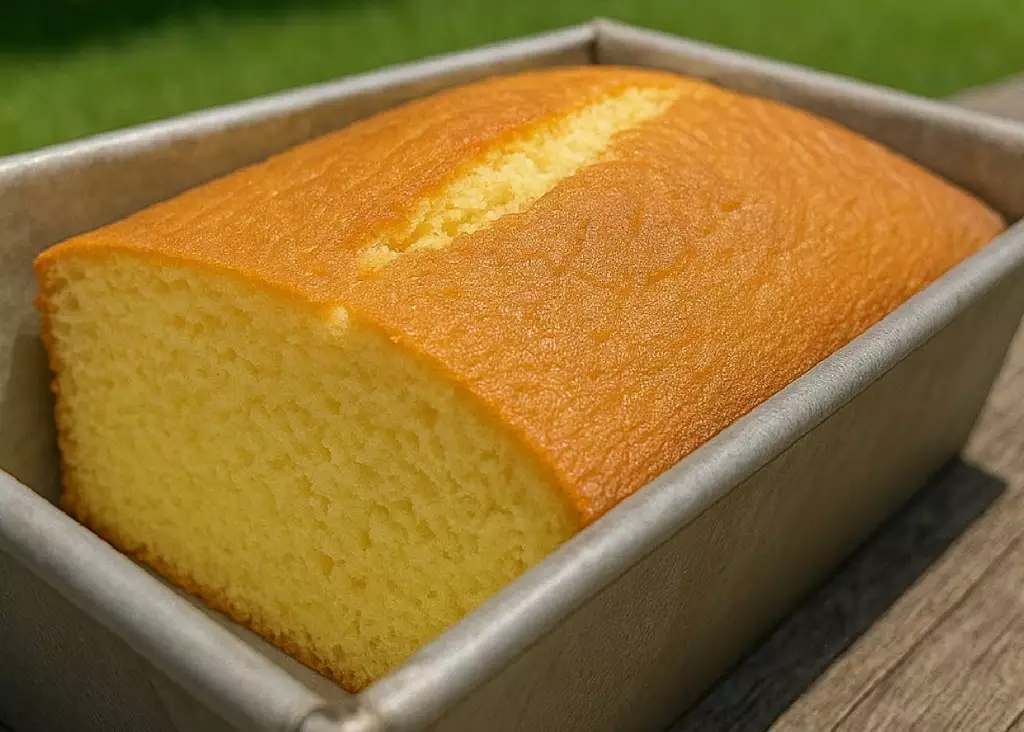
This soft butter cake is rich, tender, and full of buttery flavor. With a delicate crumb and a golden crust, it’s perfect for afternoon tea, family gatherings, or special occasions. Enjoy it plain or serve it with fresh fruit, whipped cream, or a simple glaze.
Prep Time: 15 minutes
Cook Time: 30–35 minutes
Total Time: 50 minutes
Servings: 8 slices
Oven Temperature: 350°F (180°C)
Ingredients
- 1¾ cups (230 g) cake flour
- ½ teaspoon baking powder
- 1 cup (250 g) unsalted butter, softened
- 1 cup (200 g) caster sugar
- 4 large eggs, at room temperature
- 1 teaspoon vanilla extract
- ¼ cup (60 ml) milk, at room temperature
Instructions
Step 1: Prepare the Oven and Pan
Preheat the oven to 350°F (180°C). Grease an 8-inch round cake pan or loaf pan and line it with parchment paper.
Step 2: Sift the Dry Ingredients
Sift the cake flour and baking powder together into a bowl. Set aside.
Step 3: Cream the Butter and Sugar
In a large bowl, beat the softened butter and caster sugar with an electric mixer for 3–4 minutes, until pale, light, and fluffy.
Step 4: Add the Eggs
Add the eggs one at a time, beating well after each addition. Scrape down the sides of the bowl as needed.
Step 5: Add the Vanilla
Mix in the vanilla extract until combined.
Step 6: Combine the Ingredients
Add the flour mixture in three portions, alternating with the milk in two portions. Begin and end with the flour mixture. Mix gently until just combined, taking care not to overmix.
Step 7: Bake
Pour the batter into the prepared pan and smooth the top. Bake for 30–35 minutes, or until a toothpick inserted into the center comes out clean or with a few moist crumbs.
Step 8: Cool and Serve
Let the cake cool in the pan for 10 minutes before transferring it to a wire rack. Allow it to cool completely before slicing.
Tips for the Best Butter Cake
- Use room-temperature ingredients: Softened butter, eggs, and milk help create a smooth batter.
- Cream thoroughly: Beat the butter and sugar until pale and fluffy for a lighter texture.
- Add eggs gradually: This helps keep the batter smooth and well combined.
- Avoid overmixing: Once the flour is added, mix only until incorporated.
- Use the correct pan: An 8-inch pan provides a suitable depth for this quantity of batter.
- Check early: Start checking for doneness at 30 minutes to avoid overbaking.
Flavor Variations
- Lemon Butter Cake: Add 1 tablespoon of lemon zest and finish with a lemon glaze.
- Almond Butter Cake: Replace half the vanilla extract with almond extract.
- Jam-Filled Cake: Slice the cooled cake horizontally and spread with fruit jam and whipped cream.
- Chocolate Chip Cake: Fold ½ cup of chocolate chips into the batter.
- Nutty Butter Cake: Add ½ cup of chopped walnuts or pecans.
Serving Suggestions
- Dust with powdered sugar for a simple finish.
- Serve with fresh berries and whipped cream.
- Drizzle with vanilla or lemon glaze.
- Pair with tea or coffee for an afternoon treat.
- Frost with buttercream for birthdays and celebrations.
Storage Instructions
- Room temperature: Store in an airtight container for up to 3 days.
- Refrigerator: Wrap tightly and refrigerate for up to 5 days. Bring to room temperature before serving.
- Freezer: Wrap individual slices in plastic wrap and place them in a freezer-safe container for up to 2 months.
- Reheating: Warm a slice in the microwave for 10–15 seconds if desired.
Troubleshooting
Why is my butter cake dense?
The butter and sugar may not have been creamed sufficiently, or the batter may have been overmixed. Beat the butter and sugar until fluffy, and mix gently after adding the flour.
Why did my batter curdle?
Cold eggs or adding them too quickly can cause the batter to separate. Use room-temperature eggs and add them one at a time.
Why did my cake sink in the middle?
The cake may be underbaked, or the oven temperature may be incorrect. Preheat the oven fully and avoid opening the door too early.
Why is my butter cake dry?
Overbaking or using too much flour can make the cake dry. Measure carefully and check for doneness near the end of the baking time.
Frequently Asked Questions
Can I use all-purpose flour instead of cake flour?
Yes. For each cup of cake flour, use 1 cup of all-purpose flour minus 2 tablespoons, then add 2 tablespoons of cornstarch. Sift well before using.
Can I use salted butter?
Yes. You can use salted butter instead of unsalted butter. The recipe contains no additional salt, so the flavor should remain balanced.
How do I know when the cake is done?
The top should be golden, and a toothpick inserted into the center should come out clean or with a few moist crumbs. The edges may also begin to pull away slightly from the pan.
Can I add chocolate chips or nuts?
Yes. Fold up to ½ cup of chocolate chips, chopped nuts, or dried cranberries into the batter just before baking.
Can I make this cake ahead of time?
Yes. Bake the cake a day ahead and store it in an airtight container once completely cool.
Nutrition Information
Estimated per serving, based on 8 slices:
- Calories: 350
- Carbohydrates: 35 g
- Protein: 5 g
- Fat: 22 g
- Sugar: 20 g